
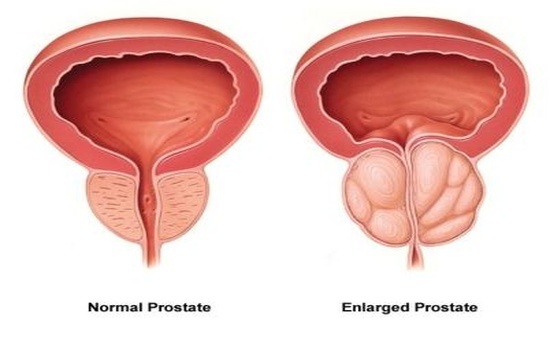
Searching for an herbal prostate treatment in Nigeria can quickly become confusing.
A Google search for “herbal medicine for enlarged prostate” can bring up dozens of products promising fast results, prostate cleansing, permanent cures and even guaranteed reversal of prostate enlargement. But when it comes to your health, the most persuasive claim is not necessarily the most reliable one.
If you are considering an herbal product for prostate or urinary symptoms, it is worth taking a few minutes to evaluate the product before paying for it.
Here are 10 things Nigerian men should check before buying an herbal prostate treatment.
1. Check Whether the Product Is Properly Registered
One of the first things to check is whether the product has an appropriate NAFDAC registration number.
NAFDAC provides an online product verification system where consumers can check registered products using the product’s registration number.
Do not simply assume that a number printed on a bottle is genuine. Where possible, verify the number through the relevant NAFDAC system and make sure the product information corresponds with what you are buying.
Registration does not mean that a product will work for every person, but it is an important first step when assessing a product being marketed in Nigeria.
2. Look at the Full Ingredient List
A product described as “100% natural” tells you very little about what you are actually consuming.
Look for a complete ingredient list.
A reputable product should make it reasonably clear what herbs or other ingredients are included. Ideally, the label should also provide relevant quantities or formulation information rather than simply listing a collection of impressive-sounding plants.
This matters because herbal prostate products can contain very different combinations of ingredients.
For example, saw palmetto, Pygeum africanum and stinging nettle have all been investigated in connection with urinary symptoms associated with BPH, but the evidence for each is different.
3. Be Suspicious of “Permanent Cure” Claims
Be especially careful when an herbal prostate product promises to permanently cure an enlarged prostate.
BPH is a medical condition, and evidence surrounding herbal treatments is not strong enough to support blanket promises of a guaranteed cure.
Saw palmetto is a good example. It has been extensively studied, but NCCIH reports that a 2023 review of 27 studies found little or no benefit when saw palmetto was used alone for BPH symptoms.
That does not mean every herbal approach is useless. It means responsible marketing should reflect what the evidence actually shows.
A product that says “supports prostate health” is making a fundamentally different type of claim from one that says “guaranteed to cure BPH.”
4. Check Who Makes the Product
Before buying, find out who is responsible for the product.
Look for:
- The manufacturer’s or marketer’s name
- Physical business information
- Customer service contact details
- Product batch information
- Expiry date
- Clear usage instructions
Be more cautious when a seller operates entirely through anonymous social media accounts or refuses to provide basic information about the product.
Transparency is particularly important when you are buying something intended for repeated consumption.
5. Examine the Packaging and Label
Do not ignore the product label.
NAFDAC’s regulations for herbal medicines and related products in Nigeria contain requirements concerning labelling and prohibit certain types of therapeutic claims in product naming and presentation.
Check whether the packaging provides basic information such as:
- Product name
- Ingredients
- Directions for use
- Warnings or precautions
- Batch or lot information
- Manufacturing information
- Expiry date
- Registration details where applicable
A poorly labelled product should make you stop and investigate further.
6. Find Out What the Ingredients Are Actually Supposed to Do
A long ingredient list can create the impression that a product must be powerful.
But more ingredients do not automatically mean better results.
For example, research has examined ingredients such as Pygeum africanum and stinging nettle for BPH-related urinary symptoms, but the evidence is limited.
The European Association of Urology also points out an important issue with herbal preparations: extracts from the same plant produced by different companies may not have identical biological or clinical effects.
Therefore, don’t just ask, “Does this product contain saw palmetto?”
Ask, “What preparation is being used, and is there meaningful evidence for that particular type of preparation?”
7. Check for Possible Drug Interactions
“Herbal” does not mean “interaction-free.”
If you are taking prescription medicines, tell your doctor or pharmacist about any herbal products you are considering.
NCCIH specifically advises people taking medicines to discuss herbal products with their healthcare providers because some herbs can interact with medicines in harmful ways.
This is particularly important for older men, who may be taking medicines for several different conditions.
Do not stop prescribed medication simply because you have found an herbal alternative online.
8. Look for Realistic Dosage and Usage Instructions
A credible product should tell you how it is intended to be used.
Be cautious about vague instructions such as “take anytime” or claims that increasing the dose will automatically produce faster results.
The appropriate amount of an herbal ingredient can depend on the preparation, concentration and formulation. Research studies also commonly use specific preparations and doses, meaning their results cannot automatically be applied to every product containing the same plant.
Follow the product’s stated instructions and do not assume that taking more will make it work better.
9. Consider Whether the Product Is Appropriate for Your Symptoms
This is perhaps the most important question.
What exactly are you experiencing?
Frequent urination, difficulty starting, weak urine flow and night-time urination can occur with BPH, but urinary symptoms can have other causes as well.
An herbal prostate supplement may not be the appropriate response to every urinary problem.
If symptoms are persistent, worsening or significantly affecting your quality of life, getting an appropriate medical assessment is more useful than repeatedly changing supplements.
Current clinical guidance recognises several approaches to male lower urinary tract symptoms, including behavioural measures, medication, minimally invasive treatments and surgery when appropriate.
10. Evaluate the Product Without Believing the Sales Pitch
Finally, separate the product information from the sales message.
A testimonial saying that a man “was completely cured in seven days” is not the same thing as clinical evidence.
Likewise, a product being described as “the number one herbal prostate treatment in Nigeria” does not establish that it is clinically superior to other products.
Look for evidence, transparent information and realistic expectations.
What About Phytoheals ProstaRecov?
For Nigerian men researching herbal options for prostate health, Phytoheals ProstaRecov is one product that can be considered using the same checklist.
Rather than choosing it simply because it is marketed as a prostate product, look at its formulation, ingredients, product information, manufacturer details and applicable regulatory information.
That is the same standard you should apply to any herbal prostate product.
The purpose of a checklist like this is not to convince you that one particular product is automatically right for you. It is to help you become a more informed buyer.
When Herbal Treatment Should Not Delay Medical Care
There are situations where buying an herbal supplement should not be your first priority.
Seek medical attention for significant or worsening urinary symptoms, blood in the urine, severe pain, fever or an inability to urinate.
In particular, being unable to pass urine can require urgent medical attention.
It is also worth remembering that an enlarged prostate is not the same thing as prostate cancer. However, symptoms can overlap with other conditions, so persistent urinary problems should not simply be self-diagnosed.
The Bottom Line
Choosing an herbal prostate treatment in Nigeria requires more than finding a product with an attractive label or convincing testimonial.
Before buying, check the NAFDAC registration, ingredients, manufacturer, labelling, evidence, dosage instructions, potential interactions and the claims being made about the product.
Most importantly, maintain realistic expectations.
Some herbal ingredients have been studied for urinary symptoms associated with BPH, but the evidence varies and different preparations can produce different results.
If you are considering Phytoheals ProstaRecov, apply the same careful evaluation to it that you would apply to any other product.
A good herbal prostate decision is not about finding the product making the biggest promise. It is about finding an appropriately presented product, understanding what it contains, knowing what the evidence does and does not show, and making an informed decision about your prostate health.